WI Governor Race: Who is Zachary Roper (D)

Cannabis Profile Series: Zachary Roper — Wisconsin Governor Candidate on Cannabis, Hemp, and Justice Reform
As part of my ongoing Cannabis Profile Series and over all 2026 Election Coverage —spotlighting candidates shaping Wisconsin’s 2026 cannabis landscape—I had the opportunity to speak with Zachary Roper, a Democratic candidate for Governor who is stepping forward with one of the most comprehensive and balanced cannabis policy platforms in the race.
Roper’s approach is rooted in three pillars: public health, safety, and justice. His message is clear: Wisconsin’s cannabis laws no longer reflect reality, and the state is overdue for a modern, practical, and fair framework.
Roper’s Big Picture: Ending Criminalization, Building a Regulated System
Roper starts with a simple truth: cannabis is already here.
But instead of being regulated, taxed, or quality-controlled, it’s unregulated, untaxed, and enforced unevenly across the state. Roper believes it’s time for Wisconsin to stop punishing people for simple possession and instead move toward a system that prioritizes safety, consumer protections, and economic opportunity.
He also recognizes that cannabis reform isn’t just about culture—it’s tied to criminal justice reform, public health, economic development, and fairness.
Federal Reform Priorities
Roper supports aligning federal and state laws so that Wisconsin’s progress isn’t undermined from Washington. Specifically, he supports:
• Descheduling or rescheduling cannabis
Removing cannabis from its outdated federal classification so states can regulate freely.
• Expungement + sentencing reform
Individuals with federal cannabis charges deserve a clean slate.
• Safe banking + tax reform
So licensed businesses can operate transparently, without the danger and instability of a cash-only industry.
What Roper Would Do as Governor of Wisconsin
Roper provided a detailed list of policies he would push for as governor, covering medical cannabis, adult-use cannabis, hemp, and cannabinoid products.
1. Medical Cannabis in Wisconsin
Roper would support legislation to:
- Create a comprehensive medical cannabis program
- Protect patients from discrimination in housing, employment, and child-custody
- Ensure product testing, labeling, and dosing standards to protect patient safety
He sees medical cannabis as a common-sense, compassionate step forward.
2. Adult-Use Legalization
Roper supports full legalization for adults 21+ with a blueprint that focuses on equity and responsible regulation:
Business structure & licensing
- Ensure opportunities for small businesses and local entrepreneurs
- Prevent a system dominated only by large out-of-state corporations
Tax revenue allocation
Roper would dedicate cannabis tax revenue to:
- Public education
- Mental health services
- Substance use prevention & treatment
- Community reinvestment—especially in areas harmed most by old enforcement policies
Justice reform
- Automatic expungement for low-level, non-violent cannabis offenses
- Resentencing pathways where appropriate
Statewide standards
Allow for local input without creating an inconsistent, confusing patchwork of city-by-city cannabis rules.
3. Hemp Regulation
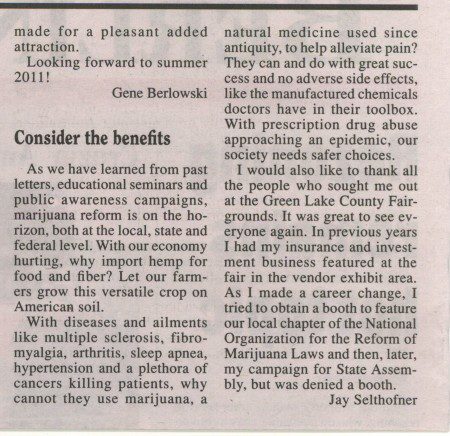
As someone active in Wisconsin’s hemp space for 15+ years, I was especially encouraged to see that Roper understands the difference between cannabis reform and the unique needs of our hemp farmers.
He supports:
- Recognizing hemp as a legitimate agricultural and industrial crop
- Removing unnecessary hurdles that make it hard for family farms to compete
- Investing in hemp-based innovation:
fiber, food, building materials, and other value-added products
This approach would strengthen Wisconsin’s place in the quickly expanding national hemp economy.
4. Cannabinoid Products (Delta-8, Delta-10, etc.)
Roper supports responsible regulation—not prohibition—of hemp-derived cannabinoids.
His plan includes:
- Age restrictions on intoxicating products
- Testing, labeling, and packaging requirements
- Marketing rules to prevent youth targeting
- Closing loopholes that allow unregulated intoxicating products to flood the market
- Protecting legitimate hemp businesses doing things the right way
This balanced framework mirrors what many in the industry—including myself—have advocated for years.
A Message to Voters from Zachary Roper
Roper wanted voters to know three key things:
1. No one should be jailed or carry a lifelong record for something that is legal across much of the country.
2. His approach is evidence-based and bipartisan.
He’s committed to listening to:
- Law enforcement
- Medical professionals
- Farmers
- Small business owners
- Communities harmed most by outdated policies
3. Cannabis reform must be done responsibly and transparently.
Clear rules, consumer protections, and open communication with the public are central to his vision.
He also expressed interest in staying connected with the Wisconsin cannabis and hemp community, reviewing research, and ensuring his policy team has access to accurate, Wisconsin-specific data as the issue continues to evolve.
Final Thoughts
Zachary Roper is asking for help getting his name out there—and based on his thoughtful, well-developed cannabis platform, he deserves to be part of the statewide conversation.
In a field where many candidates speak vaguely about cannabis, Roper stands out for offering specific, actionable, and balanced policies that address:
- justice reform
- public safety
- economic opportunity
- consumer protections
- the needs of Wisconsin farmers and small businesses
As this series continues, Roper’s profile sets a strong benchmark for what serious cannabis policy leadership can look like in the 2026 governor’s race.
If more candidates are willing to be this transparent and detailed about their plans, Wisconsin voters will be better informed—and our state will be stronger for it.