The New Jim Crow: Mass Incarceration in the Age of Colorblindness, book review and video

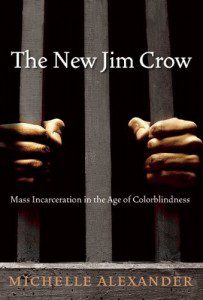
The New Jim Crow: Mass Incarceration in the Age of Colorblindness
Author: Michelle Alexander
Litigator-turned-legal-scholar Michelle Alexander, author of The New Jim Crow, argues that we have not ended racial caste in America, we have simply redesigned it: The U.S. criminal justice system functions as a contemporary means of racial control, even as it formally adheres to the principle of color blindness. Her provocative new book challenges the civil rights community—and all of us—to place mass incarceration at the forefront of a new movement for racial justice in America. As the United States celebrates the nation’s triumph over race with the election of Barack Obama, the majority of young black men in major American cities are locked behind bars or have been labeled felons for life. Event at Demos February 18, 2010. Camera, edit Joe Friendly.
Thirty years ago, fewer than 350,000 people were held in prisons and jails in the United States. Today, the number of inmates in the United States exceeds 2,000,000. In this book, Alexander argues that this system of mass incarceration “operates as a tightly networked system of laws, policies, customs, and institutions that operate collectively to ensure the subordinate status of a group defined largely by race.” The War on Drugs, the book contends, has created “a lower caste of individuals who are permanently barred by law and custom from mainstream society.” Mass incarceration, and the disabilities that come with the label “felon,” serve, metaphorically, as the new Jim Crow.
The book develops this argument with systematic care. The first chapter provides context with a brief history of the rise, fall and interrelation of the first two racial caste systems in the United States, slavery and Jim Crow. Subsequent chapters provide close scrutiny of the system of mass incarceration that has arisen over the past thirty years, examining each stage of the process (e.g., criminalization, investigation, prosecution, sentencing) and the many collateral consequences of a felony conviction (entirely apart from any prison time) and how and why each of these has operated to the detriment of African-Americans.
The book also explores how the caste system Alexander identifies is different and not-so-different from Jim Crow, the many political and economic forces now invested in sustaining it, and how it has been rendered virtually immune to challenge through litigation. The book concludes with an argument that while many particular reforms will be needed to change this system, nothing short of a social movement that changes public acceptance of the current system can solve this problem and offers critiques and proposals for the civil rights movement based on this analysis. Everyone who reads this book will come away seeing the War on Drugs and mass incarceration in a new light.
Reviews:
“After reading The New Jim Crow, Michelle Alexander’s stunning work of scholarship, one gains the terrible realization that, for people of color, the American criminal justice system resembles the Soviet Union’s gulag—the latter punished ideas, the former punishes a condition.” —David Levering Lewis, Pulitzer-prize winning historian at NYU and author of W.E.B. Du Bois: The Fight for Equality and the American Century, 1919-1963
“We need to pay attention to Michelle Alexander’s contention that mass imprisonment in the U.S. constitutes a racial caste system. Her analysis reflects the passion of an advocate and the intellect of a scholar.” —Marc Mauer, Executive Director, The Sentencing Project, author of Race to Incarcerate
“A powerful analysis of why and how mass incarceration is happening in America, The New Jim Crow should be required reading for anyone working for real change in the criminal justice system.”–Ronald E. Hampton, Executive Director, National Black Police Association