Late to the Bill, Right on Time: Why Karen Kirsch’s AB 747 Co-Sponsorship Matters

Even after a legislative session has expired, it still matters when lawmakers agree to co-sponsor legislation. Here’s why:
1️⃣ Signals Commitment for the Next Session
Co-sponsorship builds a visible record. When a bill is reintroduced, early support shows momentum and seriousness — not just a one-off idea.
2️⃣ Shapes the Policy Narrative
Publicly backing a proposal keeps the issue alive in media, advocacy circles, and campaign conversations. It frames the debate heading into elections.
3️⃣ Builds Coalitions Early
Gathering co-sponsors between sessions helps identify allies, refine language, and lock in bipartisan relationships before the clock starts ticking again.
4️⃣ Sends a Message to Stakeholders
Industries, advocacy groups, and voters track who signs on. Co-sponsorship demonstrates alignment and accountability.
5️⃣ Strengthens Campaign Positioning
Legislators can point to formal support for policy priorities while campaigning — proving they didn’t just talk about it, they put their name on it.
6️⃣ Increases Odds of Passage Later
Bills that return with a longer list of committed lawmakers are harder for leadership to ignore.
In short, co-sponsoring after a session ends isn’t symbolic — it’s strategic groundwork for the next fight.
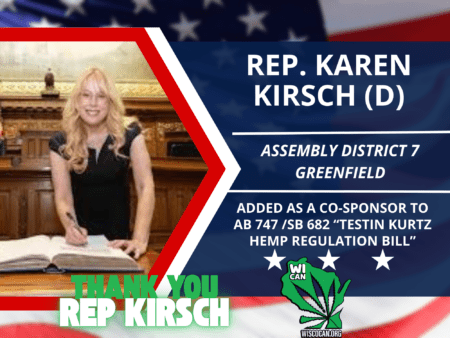
What about Rep. Karen Kirsch
In Wisconsin, Karen Kirsch (D) adding herself as a co-sponsor to AB 747 is more significant than it may appear on the surface.
First, timing matters. Even late in the session, co-sponsorship is a public declaration of alignment — and in Kirsch’s case, it carries extra weight because she sits on the very committee currently holding up AB 747. That committee is widely viewed as being stacked with co-sponsors of the competing AB 606, making her support a notable signal inside a politically lopsided room.
Second, she’s a newly elected Assembly representative with no prior co-sponsorship history. That means this isn’t routine. It’s an intentional move that helps define her legislative identity early in her tenure.
Her background also matters. Kirsch is a senior art producer and vice president of marketing, and a former nonprofit campaigns director and health care organizer. She serves with Citizen Action of Wisconsin (Health Care for All board) — a group known for disciplined messaging, grassroots mobilization, and lobbying muscle. That’s not just a résumé line; it’s infrastructure.
For advocates, there are three takeaways:
- Her co-sponsorship suggests a willingness to take a position even within a challenging committee environment.
- Her organizing and marketing background — and her ties to Citizen Action — offer a blueprint for how to sharpen messaging, mobilize supporters, and apply pressure strategically.
- It makes her a contender for a seat on the future Wisconsin Cannabis Caucus.
If you’re working the field, this is a moment to pay attention. Not just to the bill numbers, but to the players, the committee math, and the organizing networks behind them.
There is still time to let your elected official know to Support AB 747:
And let your elected officials know that you opposed AB 606:


